MIL-STD-810H

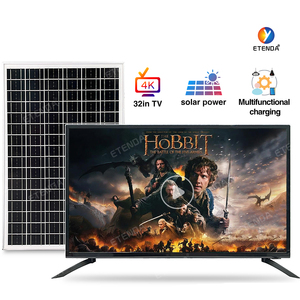
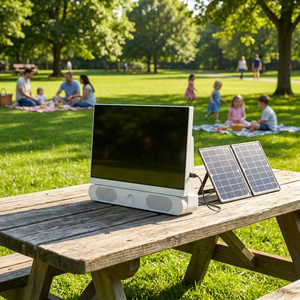
Portable Solar Panel Battery Powered Digital Rugged Touch Display Tablet
IP67 Waterproof
1000 Nits Touch
Solar Hybrid

Engineered for extreme shock, thermal tolerance (-20°C to +70°C), and continuous 24/7 mission-critical operation in logistics, energy, manufacturing, and field work force deployment.
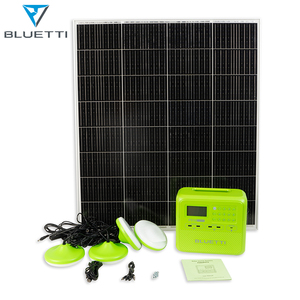
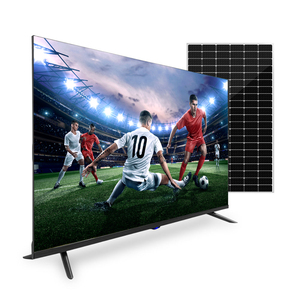
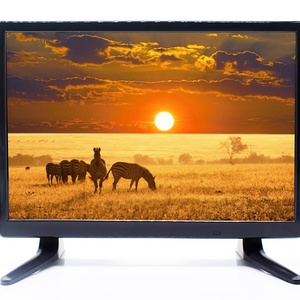
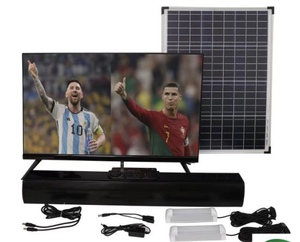
In modern enterprise ecosystems—spanning smart warehousing, automated fleet logistics, offshore oil & gas exploration, and outdoor field services—consumer-grade mobile hardware consistently fails. According to enterprise mobility studies, deploying standard off-the-shelf tablets in harsh environments leads to an annualized failure rate exceeding 18% to 24%. This downtime directly inflates Total Cost of Ownership (TCO) through hardware replacement costs, lost field productivity, and unscheduled system maintenance.
Leading Rugged Industrial Touch Screen Tablet Manufacturers & Suppliers solve this reliability bottleneck by engineering devices from the silicon up to comply with strict international standards such as MIL-STD-810H / MIL-STD-810G and IP65 / IP67 / IP68 Ingress Protection ratings. True industrial ruggedness is not merely a plastic bumper snapped onto a consumer casing; it represents an integrated thermal, mechanical, and optical engineering paradigm.
Information Gain Key Insight: Optical bonding technology (LOCA/OCA) combined with anti-reflective (AR) and anti-glare (AG) glass coatings reduces ambient internal light reflection from 13.5% down to under 0.2%, permitting perfect screen readability under direct 10,000+ Lux sunlight while boosting structural impact resistance by 300%.
| Evaluation Parameter | Consumer Grade Tablets | Semi-Rugged Hardware | Enterprise Industrial Rugged Tablets |
|---|---|---|---|
| Operating Temperature | 0°C to 35°C (Throttles in heat) | -10°C to 50°C | -20°C to +70°C (Extended Range) |
| Drop & Impact Resistance | 0.5m (Glass shatters easily) | 1.0m (Reinforced bezel) | 1.5m to 1.8m (Concrete drop certified) |
| Ingress Protection (IP) | IP52 to IP67 (Transient water) | IP65 (Dust tight, water spray) | IP67 / IP68 / IP69K (Full submersion/jets) |
| Display Luminance & Bonding | 250 – 400 Nits (Air Gap) | 500 – 700 Nits (Air Gap/Bonded) | 800 – 1,500+ Nits (Full Optical Bond) |
| Touch Screen Usability | Bare finger only | Basic wet finger response | Multi-mode: Heavy Glove, Rain, Stylus |
| Component Longevity / BOM Lock | 6 to 12 months lifecycle | 1 to 2 years lifecycle | 5 to 7+ Years Fixed BOM Availability |
The primary human-machine interface (HMI) in field automation is the touch screen. Conventional Projected Capacitive (PCAP) touch sensors struggle when exposed to liquid droplets, conductive chemical films, or thick work gloves (e.g., rubber, leather, or Kevlar). High-tier industrial display engineering leverages custom-tuned IC touch controllers (such as EETI or ILITEK solutions) capable of dynamic self-capacitance and mutual-capacitance switching.
Advanced algorithms isolate localized conductive water drops from physical finger presses, eliminating false capacitive triggers during heavy rain, marine salt spray, or high-humidity condensation environments.
High-sensitivity firmware automatically scales driving voltage to detect touch gestures through heavy utility gloves up to 5mm thick, eliminating the need for workers to remove safety gear in hazardous areas.
Thermally tempered glass featuring 7H+ Mohs hardness resistance prevents scratches, chemical erosion from industrial solvents, and point-impact cracking under heavy physical abuse.
As Industry 4.0 matures into Industry 5.0, procurement teams must evaluate hardware suppliers not only based on current specs, but also on technological roadmaps. Over the next five years, five key architectural shifts will redefine enterprise tablet manufacturing:
Next-gen rugged tablets are incorporating dedicated Neural Processing Units (NPUs) delivering 15 to 45 TOPS of AI acceleration. This enables real-time computer vision, predictive maintenance inspection, and automated license plate / barcode recognition directly on the field device without relying on high-latency cloud processing.
Integration of 5G NR Reduced Capability (RedCap) and Private 5G network bands (CBRS) guarantees ultra-reliable low-latency communication (URLLC) within smart factories, seaport terminals, and underground mining shafts where public cellular coverage is absent.
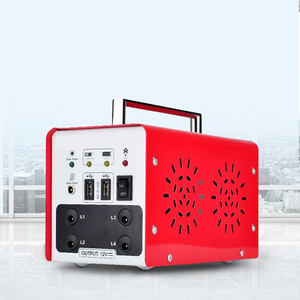
To eliminate shift-change downtime, modern industrial tablets utilize dual hot-swappable battery bridge architectures combined with ultra-efficient MPPT solar charging controllers, permitting indefinite continuous operation in off-grid field deployments.
Fixed port designs are being replaced by modular expansion bays. Fleet operators can seamlessly click in specialized hardware modules—such as 1D/2D Zebra scan engines, RTK GNSS modules, CANbus vehicle bus interfaces, or UHF RFID readers—via secure pogo-pin dock interfaces.
Fanless, sealed chassis design utilization has evolved. By utilizing magnesium-aluminum alloy chassis and advanced vapor chamber heat pipes, modern rugged displays dissipate high thermal loads passively without compromising IP68 dust-tight seals or requiring power-draining cooling fans.
Hardware-rooted security via discrete TPM 2.0 microchips, encrypted storage drives, biometric fingerprint readers, and Smart Card (CAC) readers ensures that sensitive operational technology (OT) data remains impenetrable even if a device is physically lost or stolen in the field.
Procurement leaders are shifting away from initial hardware purchase price as the primary buying metric, adopting a holistic Total Cost of Ownership (TCO) model over a 5-year device operating horizon.
Financial Reality Check: While an enterprise-grade rugged tablet carries a higher initial upfront hardware capital expense (CapEx) compared to a commercial tablet, its 5-year OpEx is 42% to 65% lower due to reduced repair cycles, zero workflow disruption, and extended 5-year fixed component availability.
Verify that the OEM vendor operates ISO 9001:2015 and ISO 14001 certified cleanroom assembly lines with automated optical inspection (AOI) and environmental burn-in testing chambers.
Ensure the supplier guarantees a locked BOM for a minimum of 3 to 5 years. Unannounced component revisions (CPU, touch IC, Wi-Fi modules) can invalidate software image certifications.
Assess vendor engineering responsiveness for custom BIOS/OS builds, custom housing branding, specialized connector integration (M12 aviation plugs, RS232/485), and mounting setups (RAM Mount, VESA).
Answers to common technical, manufacturing, and supply chain queries raised by enterprise buyers and hardware integrators.
IP (Ingress Protection) ratings define sealing effectiveness. The first digit represents dust protection (6 = dust-tight enclosure). The second digit indicates liquid protection: IP65 withstands low-pressure water jets; IP67 protects against continuous water immersion up to 1 meter depth for 30 minutes; IP68 offers custom continuous submersion protection under defined pressure conditions. For outdoor or washed-down industrial environments, IP67 or higher is strongly recommended.
Optical Bonding fills the air gap between the touch screen sensor and the LCD panel using an optical-grade resin (LOCA/OCA). Eliminating the internal air gap prevents ambient sunlight reflection between glass layers, dramatically improves contrast, prevents internal fogging/condensation in high humidity, and increases physical glass shatter resistance by up to 300%.
Yes. Standard units operate down to -10°C, while wide-temperature rugged tablets equipped with internal micro-heaters and wide-temp battery chemistry operate reliably from -20°C to +70°C. This enables seamless deployment inside cold-storage food distribution centers or Arctic field operations without display lag or battery drop-off.
We provide full hardware board support packages (BSP) for both Android (Android 11 up to Android 13/14 with GMS or AOSP options) and Windows Enterprise IoT (Windows 10/11 IoT Enterprise 64-bit), as well as Linux Ubuntu/Debian builds for custom industrial edge computing applications.
Our ODM manufacturing services support custom chassis colorways, silkscreen logo branding, tailored I/O port configurations (Ethernet RJ45, DB9 RS232/RS485, CANbus, USB-C Power Delivery), integrated high-frequency RFID/NFC, Zebra 2D barcode engines, custom BIOS splash screens, and pre-installed enterprise MDM software configurations.
Devices with hot-swap support feature a small built-in internal bridge battery that powers the tablet's CPU and memory in standby mode for 3 to 5 minutes while the primary high-capacity external battery pack is unlatched and replaced. This allows 24/7 continuous operation without closing active software applications.
Standard evaluation sample units are available with a rapid dispatch lead time of 3 to 7 working days. For custom OEM/ODM production runs, standard factory MOQ starts at 100 to 500 units depending on customization complexity, with production mass-assembly cycles typically taking 3 to 4 weeks.
All enterprise industrial products come standard with a 12-to-36-month comprehensive factory hardware warranty. We provide spare parts availability guarantees for up to 5 to 7 years, dedicated engineering FAE support, and advanced hardware replacement service level agreements (SLAs) for enterprise partners.
Partner with a globally recognized manufacturer of rugged touch tablets, industrial displays, and custom embedded systems. Speak directly with our senior application engineers to request sample units, technical datasheets, or custom OEM/ODM quotations.