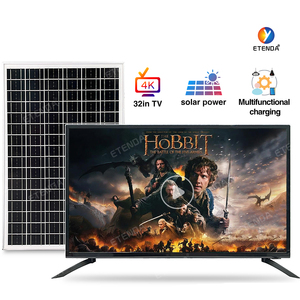
High-reliability solar surveillance hubs, off-grid power units, and intelligent display kits engineered for commercial global distribution.

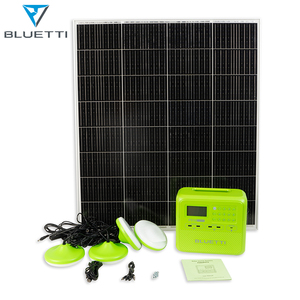
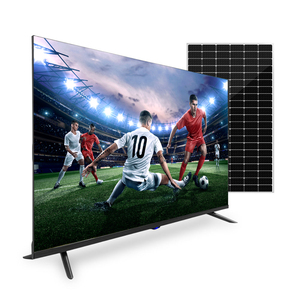

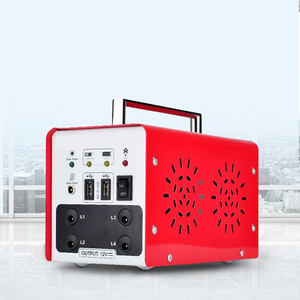

The global demand for off-grid security systems, autonomous perimeter protection, and integrated solar powered electronics has experienced exponential growth. As infrastructure expands into remote agricultural zones, utility-scale solar farms, construction sites, and off-grid residential developments, traditional wired surveillance models present prohibitive installation costs—often exceeding $15 to $35 per linear foot solely for trenching and conduit deployment.
China has firmly established itself as the epicenter of advanced solar-powered security camera manufacturing, producing over 85% of the world’s off-grid smart surveillance hardware. By leveraging localized supply chains across Guangdong (Shenzhen, Dongguan, Huizhou) and Zhejiang (Ningbo, Hangzhou), Chinese manufacturers integrate advanced photovoltaic cells, high-density energy storage, low-power System-on-Chips (SoCs), and cellular IoT telemetry into compact, weather-resistant hardware nodes.
Legacy solar cameras utilized 18650 ternary lithium-ion cells, which suffered from thermal runaway risks and severe capacity degradation after 500–800 cycles. Top-tier Chinese original equipment manufacturers (OEMs) have shifted completely to Lithium Iron Phosphate (LiFePO4) 32700 or prismatic cells. LiFePO4 offers superior safety, non-combustible stability, and over 3,000 to 6,000 charge-discharge cycles while operating flawlessly between -20°C and +65°C.
False positive alerts represent the primary cause of battery depletion in battery-powered security cameras. Early passive infrared (PIR) sensors failed to distinguish between foliage movement, small animals, and actual human intruders. Tier-1 China factories now embed dual-spectrum fusion algorithms combining PIR thermal sensing with 24GHz Millimeter-Wave Doppler Radar. This dual-verification protocol reduces false triggers by 96%, allowing cameras to remain in ultra-low power sleep mode until genuine threats enter the detection perimeter.
Standard polycrystalline solar panels (15-17% efficiency) are no longer suitable for compact off-grid security systems. The latest 2025 camera setups feature micro N-Type TOPCon (Tunnel Oxide Passivated Contact) monocrystalline panels with energy conversion efficiencies reaching 23.5% to 25%. High-end PTZ models feature glass-on-glass bifacial solar modules that capture indirect ambient and reflected ground light, increasing overall daily power harvest by up to 20% during overcast conditions.
A true commercial-grade solar security camera must support continuous operation during extended periods of zero sunlight (termed "Autonomy Days"). Top China suppliers calculate power budgets using the following engineering ratio:
$$\text{Required Battery Capacity (Wh)} = \frac{(\text{Daily Standby Power} + \text{Daily Active Recording Power}) \times \text{Autonomy Days (e.g., 5 days)}}{\text{Max Depth of Discharge (0.80)}}
For installations lacking local Wi-Fi infrastructure, Chinese manufacturers provide integrated multi-band 4G LTE Cat-1/Cat-4 module chips with pre-flashed eSIM software. This allows enterprise buyers to deploy cameras globally without swapping local SIM cards, leveraging remote firmware updates (FOTA) via AWS or Microsoft Azure cloud backbones.
To assist global procurement officers and system integrators in drafting RFQs, the matrix below highlights critical hardware distinctions between retail consumer-grade units and enterprise OEM security hardware sourced from China:
| Architecture Feature | Consumer-Grade (Low-Cost) | Commercial/Industrial Grade (Tier-1 OEM) | Impact on Reliability |
|---|---|---|---|
| Battery Chemistry | Ternary NCM (18650 Cells) | LiFePO4 (Grade-A Automotive Cells) | 10x cycle lifespan; thermal stability up to 65°C |
| Solar Controller | PWM (Pulse Width Modulation) | Smart MPPT (Maximum Power Point Tracking) | 30% higher charging efficiency in cloudy weather |
| Detection Mechanism | Single PIR Motion Sensor | PIR + 24GHz Radar + NPU AI Humanoid Vector | Eliminates 96% of false alarms; saves battery |
| Enclosure Protection | IP65 ABS Plastic | IP67 Die-Cast Aluminum Alloy / Anti-UV Polycarbonate | Complete resistance to salt spray, dust, and heavy storms |
| Operating Range | -10°C to 45°C | -25°C to 65°C (Built-in BMS Thermal Heater optional) | Operational in extreme Nordic cold or Middle East heat |
| Storage System | MicroSD Only (Max 128GB) | eMMC 5.1 Flash + Dual MicroSD + AES-256 Cloud Encrypted | Prevents data loss during network dropouts or card corruption |
Sourcing directly from China requires a rigorous vendor evaluation protocol to avoid low-quality assembly operations. When inspecting potential suppliers in Shenzhen, Dongguan, or Ningbo, verify the following core manufacturing standards:
Ensure the factory operates high-speed Yamaha or Panasonic Surface Mount Technology (SMT) lines for PCB assembly, minimizing manual soldering defects.
Verify on-site test equipment: Waterproof IPX7 immersion tanks, high-low temperature test chambers (-40°C to +80°C), and salt spray corrosion testers.
A reliable OEM performs a mandatory 48-hour continuous cycle aging test on 100% of finished solar camera units before packaging and export.
As a global consumer electronics and off-grid solution manufacturer, we bring over two decades of engineering excellence, robust supply chain management, and stringent quality control. Serving distributors, brand owners, and system integrators across 50+ countries worldwide, our manufacturing ecosystems offer:
Comprehensive IQC, IPQC, and OQC testing procedures guarantee zero-defect shipment rates across high-volume production orders.
From rapid 3D prototyping and optical lens customization to mobile app deployment, we transform product ideas into retail-ready solutions.
Fully certified hazardous goods shipping (UN38.3 + MSDS), enabling seamless air and sea freight logistics to worldwide destinations.
Looking for a reliable manufacturing partner for your next off-grid security camera project? Connect directly with our engineering team to discuss wholesale pricing, custom tooling, and sample evaluation kits.