
High-reliability projectors, DC solar entertainment kits, and commercial Android smart displays engineered for global wholesale channels and custom OEM/ODM deployments.

The global video display market is experiencing an unprecedented structural pivot away from legacy fixed-screen televisions toward high-portability, smart projection ecosystems. Driven by advancements in LED optical efficiency, system-on-chip (SoC) processing speeds, and AI-driven automated calibration algorithms, OEM/ODM Smart Android Video Projectors have matured into a foundational product category for international consumer electronics brands, telecom operators, and wholesale distributors worldwide. As buyers navigate an increasingly competitive vendor landscape, sourcing decisions must be guided by technical transparency, structural optical reliability, and platform compliance.
This industry paper delivers an in-depth operational evaluation for procurement executives, product directors, and brand owners seeking to establish high-margin B2B manufacturing partnerships. Beyond superficial aesthetic customization, modern OEM/ODM manufacturing demands deep integration capability across optical engine design, thermal dissipation engineering, embedded Android OS architecture, and Widevine digital rights management (DRM) compliance. By understanding the core engineering choices that separate consumer-grade toys from enterprise-grade projection terminals, buyers can mitigate post-sale RMA liabilities and maximize brand equity.
Fully enclosed optical paths featuring IP5X ingress protection, copper heat-pipe liquid cooling, and zero-dust LCD panel isolation to eliminate black spot failure modes permanently.
Official Android TV OS customization with Google Assistant integration, Chromecast support, and Widevine L1 DRM keys enabling 1080p/4K playback on Netflix and Prime Video.
Integrated Time-of-Flight (ToF) laser rangefinders and CMOS camera modules powering instant autofocus, omnidirectional keystone correction, and dynamic obstacle avoidance.
In evaluating OEM/ODM smart projection hardware, buying organizations must align their product roadmaps with five pivotal structural trends currently redefining the international hardware landscape:
Historically, low-cost LCD video projectors utilized open-frame optical pathways. In open systems, cooling air pulled by internal fans flows directly across the liquid crystal panel and polarizing filters. Within 3 to 6 months of consumer usage, microscopic ambient dust particles adhere to the high-temperature LCD panel surface, creating permanent black spots on the projected image and accelerating thermal degradation. Modern B2B sourcing standards require **Fully Enclosed Optical Engines (IP5X Certified)**. By isolating the light source, internal mirrors, and LCD panel within a hermetically sealed aluminum housing, thermal dissipation is handled externally via copper heat pipes and dual-turbine silent blowers. This optical architecture extends product operational lifespan from 5,000 hours to over 30,000 hours while reducing field return rates below 0.3%.
Hardware performance in smart projectors is defined by the underlying SoC infrastructure. Enterprise OEM manufacturing has shifted away from generic low-cost processors toward high-performance quad-core chips (such as Amlogic T972/T982, MediaTek MT9630, or Rockchip RK3566). Crucially, international importers must differentiate between **Widevine DRM Level 3** and **Widevine DRM Level 1**. Uncertified generic Android projectors lack hardware-level cryptographic key exchange, restricting commercial streaming services (Netflix, Amazon Prime, Disney+) to standard-definition 480p resolution via unauthorized web wrappers. Tier-1 OEM/ODM manufacturers provide certified Android TV OS builds backed by Widevine L1 licensing, allowing native high-definition HD and 4K playback directly from OEM remote control hotkeys.
Manual focus wheel adjustment and manual 4-point trapezoid tuning are officially obsolete in mid-to-high tier projection categories. Modern procurement specifications demand zero-friction user setups driven by embedded sensor arrays. Advanced OEM configurations combine **Time-of-Flight (ToF) laser distance sensors** with secondary CMOS camera perception lenses. Operating through edge-AI firmware algorithms, these systems calculate surface angle vectors within milliseconds to deliver seamless **Auto-Focus**, **Omni-Directional Auto-Keystone**, **Intelligent Screen Alignment**, and **Real-Time Obstacle Avoidance** without requiring user intervention.
Lumens marketing claims have historically created confusion in commercial wholesale channels. Professional importers now insist on standardized measurement parameters verified under ISO 21118 standards (**ANSI Lumens**) rather than arbitrary light-source "Lux". The market is bifurcating into two core light-engine architectures:
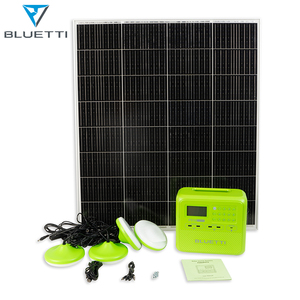
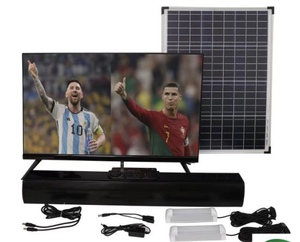
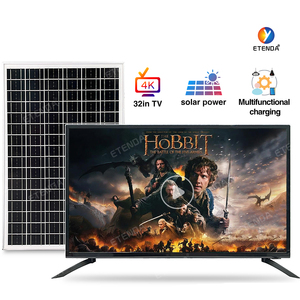
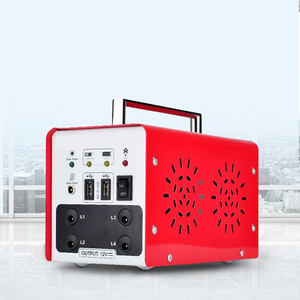
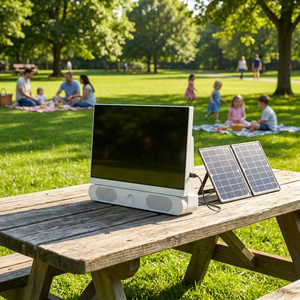
A rapidly growing procurement vector across emerging market territories, rural education initiatives, and outdoor recreation sectors is the integration of direct DC low-voltage architecture. By configuring smart Android projectors and commercial display terminals to operate natively on **DC 12V / 19V inputs**, these devices pair directly with portable LiFePO4 battery power stations and photovoltaic solar arrays without the inverter efficiency losses of standard AC power conversion. OEM custom options include built-in Battery Management Systems (BMS) with real-time state-of-charge data displayed on the custom Android UI.
Use this benchmark breakdown when auditing factory engineering proposals and component bill-of-materials (BOM):
| Engineering Attribute | Legacy Open Engine Projectors | Next-Gen OEM Sealed Smart Android Projectors | Commercial Value Impact |
|---|---|---|---|
| Optical Ingress Rating | Non-sealed (IP0X) — High Dust Risk | Hermetically Sealed IP5X Enclosure | Prevents black spots, cuts warranty claims by 85% |
| Thermal Dissipation | Single axial fan pulling dirty air inside | Dual-turbine silent fan + Copper Heat Pipes | Reduces fan noise to <28dB; prevents LCD burn |
| System SoC & RAM | Dual-core 1GB RAM / 8GB ROM | Quad-Core Amlogic/MTK 2GB/32GB or 4GB/64GB | Smooth UI navigation, quick app launch, zero lag |
| DRM Security Level | Widevine L3 (Max 480p on Netflix) | Widevine L1 Certified + HDCP 2.2 | Native 1080p / 4K official streaming support |
| Focus & Keystone | Manual physical dial wheel | ToF Laser Instant Auto-Focus & Auto-Keystone | Premium out-of-box customer experience |
| Wireless Connectivity | Single-Band 2.4GHz Wi-Fi 4 / BT 4.0 | Dual-Band Wi-Fi 6 (2.4G/5G) + Bluetooth 5.2 TWS | Lag-free screen mirroring & wireless speaker link |
As a established consumer electronics manufacturing group with over 25 years of engineering experience and a product lineup exceeding 500 active SKUs, our facilities deliver comprehensive end-to-end OEM and ODM services to brand partners across 50+ countries. Sourcing from our certified industrial facilities guarantees full compliance with international standards, transparent supply chain management, and scalable mass-production capacity.
We provide full-lifecycle product development, translating concept sketches into mass-produced certified commercial hardware through five structured phases:
Quality reliability is enforced at every stage of assembly through automated visual inspection and continuous stress-testing protocols:
Standardized industrial assembly workflows, trace-code component tracking, and rigorous incoming quality control (IQC) across all raw optical materials.
Tailor your brand user interface, boot animation, pre-installed streaming platforms, and enterprise remote monitoring APIs with our in-house software engineers.
Flexible delivery terms (FOB, CIF, DDP) supported by sea, air, and express logistics hubs to streamline customs clearance in North America, Europe, and Asia.
Here are operational answers to the most critical technical and logistics inquiries raised by international wholesale buyers, brand managers, and procurement officers:
For standard catalog hardware with customized logo laser-etching and branded gift boxes, our minimum order quantity starts at 500 units. For full ODM customization—including custom industrial plastic injection tooling, tailored PCBA layout design, and bespoke Android launcher ROM compilation—the standard MOQ is 1,000 to 2,000 units depending on chassis complexity.
We partner directly with certified silicon chipset vendors (Amlogic, MediaTek, Rockchip) to deliver official Android TV and Android AOSP operating systems. Our software engineering team handles OS security patch updates, OTA (Over-The-Air) firmware server hosting, and Widevine L1 key provisioning, ensuring your end-users experience smooth streaming performance without app crashing or authentication failures.
ANSI Lumens is the standard international metric defined by ISO 21118, measuring actual projected light output across a 9-point white screen matrix. In contrast, "Marketing Lux" or "Source Lumens" often measure raw light output directly at the LED chip before optical loss through lenses and LCD panels. Our engineering datasheets strictly declare verified ANSI Lumens so commercial buyers can benchmark performance accurately.
Non-sealed optical engines draw ambient dust directly onto internal LCD panels via cooling airflow, leading to burnt polarization filters and black spot returns within months. Our IP5X sealed optical engines completely isolate the optical path, relying on external copper heat pipes for thermal cooling. This guarantees dust-free projection, reduces thermal noise below 28dB, and slashes warranty RMA claims to under 0.3%.
Yes. We specialize in low-voltage DC 12V and DC 19V native projection hardware specifically optimized for off-grid solar kits, RV recreational setups, and rural electrification projects. These units connect directly to solar charge controllers or portable LiFePO4 battery banks without needing inefficient AC power inverters.
Golden sample approval and custom packaging design sign-off take approximately 7 to 10 working days. Mass production lead time is typically 25 to 30 calendar days following deposit confirmation. Repeat orders with finalized artwork can be expedited within 18 to 22 days.
All our OEM/ODM projection models are designed to meet international compliance standards. We provide certified factory test reports for CE (EMC/LVD), FCC ID, RoHS 2.0, PSE, Telec, REACH, and UL/CB safety standards, ensuring smooth customs clearance across North American, European, Japanese, and Australian markets.
We back our hardware with a standard 12 to 24 month factory warranty. For bulk distributor orders, we provide 1% to 2% complimentary spare parts (including main PCBA power boards, remotes, and external adapters) along with factory repair manuals and remote technical support for regional service hubs.