
Engineered for extreme environmental resilience, ultra-low power consumption, and direct DC-bus solar charge coupling. Choose an OEM configuration or request custom B2B engineering specifications.

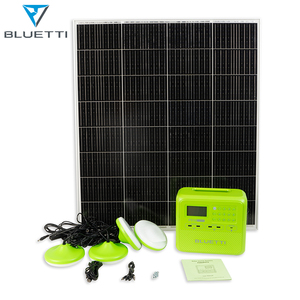
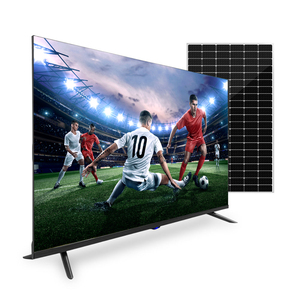
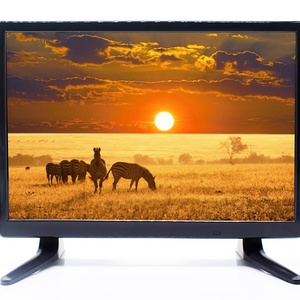
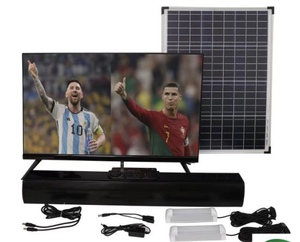
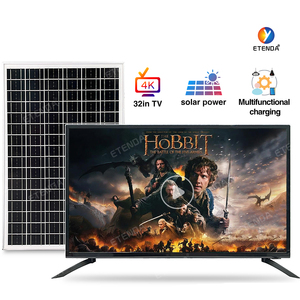
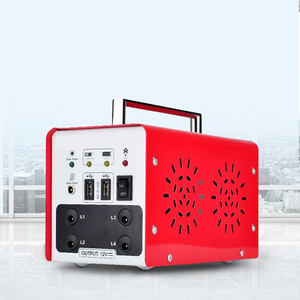

In off-grid and weak-grid environments across Sub-Saharan Africa, Southeast Asia, Latin America, and remote oceanic regions, access to information, educational media, and commercial digital broadcasting is bottlenecked by power grid stability. Conventional consumer television displays rely on alternating current (AC) power inputs ranging from 110V to 240V. When deployed within solar-powered home systems (SHS) or commercial off-grid installations, traditional AC televisions demand an external power inverter to convert direct current (DC) generated by photovoltaic panels into AC power. This conversion cycle introduces systemic energy dissipation—typically suffering from a 15% to 28% thermal power loss during double conversion (DC to AC to internal low-voltage DC driving the LED panel).
As a specialized OEM/ODM Solar Powered TV Systems Manufacturer and Global Exporter, our engineering paradigm centers on Native DC Architecture Optimization. By eliminating the AC inverter stage entirely, our solar-powered televisions connect directly to 12V or 24V DC microgrid buses. Paired with ultra-high efficiency Maximum Power Point Tracking (MPPT) charge controllers and industrial-grade Lithium Iron Phosphate (LiFePO4) battery chemistries, our systems achieve up to 98.4% energy utilization efficiency. This whitepaper details the engineering specifications, global procurement trends, supply chain dynamics, and regulatory compliance standards governing off-grid solar display infrastructure.
"Direct DC-bus solar TV integration reduces system-wide photovoltaic capacity requirements by 30%, while extending battery operational longevity beyond 6,000 deep discharge cycles under high-ambient temperature conditions."
Direct DC driving eliminates harmonic distortion, high-frequency switching noise, and thermal dissipation, dramatically preserving battery state-of-charge (SoC).
Integrated GSM/GPRS IoT firmware supporting OpenPAYGO, Paygee, and Angaza protocols for automated field activation and remote credit management.
Integrated Buck-Boost DC regulators supporting input ranges from 9V to 30V DC, protecting delicate LED driver circuitry from voltage spikes.
The global off-grid solar market is undergoing a rapid transition from basic lighting products (Lanterns and SHS Level 1) to high-value productive-use appliances (SHS Level 2 and Level 3). Market intelligence from Lighting Global and GOGLA indicates that solar-powered televisions represent the single highest-demand appliance upgrade among off-grid households and commercial micro-enterprises worldwide.
| Engineering Metric | Standard AC Consumer TV (Inverter Driven) | Custom OEM Native DC Solar TV System |
|---|---|---|
| Power Architecture | 100V–240V AC via External Inverter | Native 9V–30V DC Direct Bus Drive |
| System Efficiency | 68% – 75% (Multiple Conversion Loss) | 95% – 98.4% (Direct Bus Efficiency) |
| Peak Power Consumption (32") | 45W – 65W AC | 12W – 18W DC (Ultra-Low Power LED Backlight) |
| Battery Longevity Impact | High thermal stress, fast degradation | Optimized discharge rates, extended lifespan |
| PAYGO Lock Capability | Non-existent (Requires external relay) | Embedded Microcontroller / Firmware Level Lock |
| Operating Temperature | 0°C to 40°C (Indoor Rating Only) | -10°C to 65°C (Tropical & Desert Class) |
As a pioneering supplier, our R&D initiatives focus on three critical technology pillars designed to enhance information gain, reduce total cost of ownership (TCO) for telecom operators and energy suppliers, and maximize operational uptime.
By transitioning to custom optical lens arrays and high-efficiency LED chips delivering up to 180 lumens per watt, our engineering team has lowered the power envelope of a 32-inch Full HD display screen to under 15 Watts without sacrificing luminance or contrast ratio.
Standard Lead-Acid and AGM batteries suffer from deep discharge damage (DoD limited to 50%). Our systems incorporate Grade-A prismatic LiFePO4 cells with smart BMS protection, enabling 90%+ Depth of Discharge and a 10-year design lifespan even under high thermal stress.
Next-generation firmware monitors daily solar irradiance patterns and historical user viewing habits. During prolonged monsoon seasons or heavy cloud cover, the TV dynamically throttles backlight intensity by 15-20% imperceptibly, extending autonomy by up to 48 hours.
Unifying global broadcasting standards into modular mainboard configurations allows seamless deployment across Africa (DVB-T2/S2), Latin America (ISDB-T), and North America (ATSC), integrated with low-power Android OS for smart OTT streaming.
Leveraging decades of consumer electronics manufacturing expertise, robust SMT assembly lines, and dedicated cleanroom panel bonding infrastructure, our organization serves as a trusted global supply chain partner for national telecom operators, NGO rural electrification initiatives, commercial distributors, and OEM consumer electronics brands.
Every TV display system undergoes 100% aging tests, high-voltage spike tolerance tests, thermal chamber testing (-20°C to 70°C), and vibration testing simulating rough logistics transit.
Designed specifically for off-grid field serviceability. Mainboards, LED driver boards, and battery BMS modules feature modular plug-and-play connectors to minimize maintenance downtime.
Full UN38.3 certification for lithium battery air and sea logistics, complemented by MSDS and dangerous goods export documentation handling for international freight peace of mind.