
Explore our tier-1 manufactured hardware portfolio spanning wireless automotive dongles, solar-powered smart TV displays, and portable commercial electronics optimized for global procurement.

Outdoor digital poster powered by integrated solar energy systems. Heavy-duty commercial design with smart ad management playback.
Send an Inquiry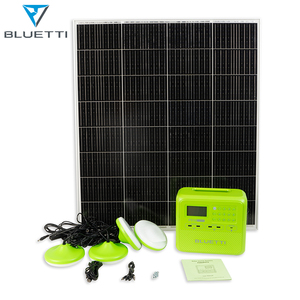
Small solar panel green lighting DC TV system kit engineered specifically for off-grid emerging market retail and SHS distribution.
Send an Inquiry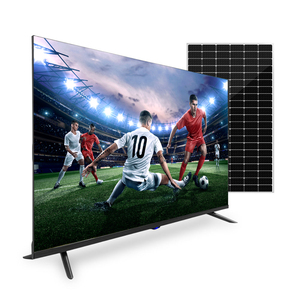
Energy-efficient 12V DC smart TV with pre-installed Android Play Store. Tailored OEM software branding for global retail chains.
Send an Inquiry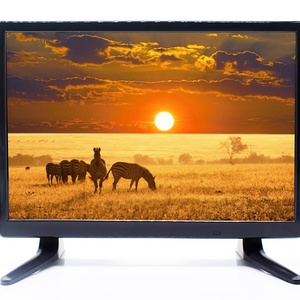
Integrated polycrystalline solar kit with MPPT lithium-ion battery management. High reliability backed by international factory warranty.
Send an Inquiry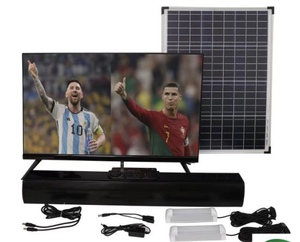
Optimized cost-to-performance ratio for home power infrastructure. Low power consumption panel designed for continuous off-grid operation.
Send an Inquiry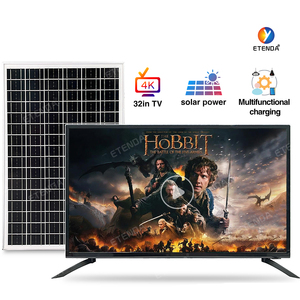
Turnkey solar entertainment system with 18V 50W panel, multi-light LED accessory set, and ultra-wide viewing angle display panel.
Send an Inquiry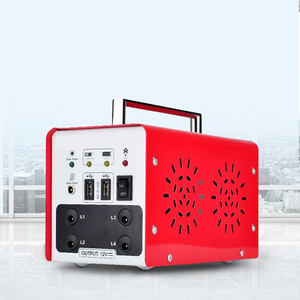
Heavy-duty power conversion charge kit matching high-output solar arrays with high-definition TV units for commercial distribution.
Send an Inquiry
Rechargeable outdoor TV with built-in high capacity lithium battery, stereo speakers, and low-latency digital tuner for outdoor applications.
Send an InquiryThe rapid shift from tethered USB in-vehicle infotainment (IVI) systems to seamless wireless connectivity has elevated the requirement for specialized Custom OEM Android Auto Wireless Dongles Factories. Original Equipment Manufacturers (OEMs) and Tier-1 automotive aftermarket distributors face significant hardware and software synchronization challenges when attempting to achieve latency-free wireless projection.
A wireless Android Auto adapter functions by establishing an initial low-energy Bluetooth (BLE 5.0/5.2) handshake for device authentication, immediately followed by offloading data streaming to a high-speed 5.8 GHz Wi-Fi link (802.11ac/ax). Designing hardware that executes this transition cleanly across thousands of fragmented vehicle head units requires deep micro-controller customization and specialized firmware optimization.
Leading OEM factories utilize dual-core and quad-core System-on-Chip (SoC) architectures (such as Rockchip RK3328, Allwinner V831, or Realtek RTL8822CS series) paired with dedicated hardware video decoders. Unlike generic consumer electronics, automotive-grade wireless dongles must endure thermal spikes ranging from -20°C to +85°C inside enclosed car cabins.
| Architecture Component | Standard Commercial Grade | Automotive OEM Factory Standard | B2B Performance Impact |
|---|---|---|---|
| Processor (SoC) | Single-Core 400MHz MCU | Quad-Core ARM Cortex-A7 @ 1.2GHz | Eliminates UI frame dropping and lag during multi-app navigation. |
| Wi-Fi Transceiver | 2.4GHz / 5.0GHz Single Band | 5.8GHz Dual-Band MIMO (802.11ac/ax) | Prevents interference from crowded city cellular towers and Wi-Fi networks. |
| Bluetooth Version | Bluetooth 4.2 BR/EDR | Bluetooth 5.2 / 5.3 Low Energy (BLE) | Reduces initial vehicle pairing time from 25s down to under 6s. |
| Thermal Management | Passive Plastic Shell | Aluminum Alloy Heatsink + Thermal Pads | Prevents SoC thermal throttling during multi-hour GPS navigation. |
| Power Protection | Basic Fuse Circuitry | Overvoltage Protection (OVP) & ESD Guard | Safeguards dongle against vehicle alternator voltage surges (up to 36V). |
The primary metric of user experience in wireless Android Auto adapters is media playback and touch control input lag. Standard Android Auto projection protocol encodes audio via PCM/AAC and video via H.264/H.265. When transferred wirelessly, buffer management is vital.
Advanced Android Auto Wireless Dongle Factories implement custom zero-copy buffer pools within the embedded Linux or Android kernel. By directly routing network packets from the Wi-Fi PHY layer to the hardware H.264 decoder ring, end-to-end latency is compressed to below 120ms, providing real-time touch feedback identical to direct wired connection.
As the automotive aftermarket transitions toward high-definition smart screens and integrated cockpits, procurement directors must align with factories capable of adapting to four major industrial trends over the next five years:
Modern global procurement demands universal dongles running dual-boot firmware capable of serving both Apple CarPlay and Android Auto ecosystems on a single PCB, eliminating SKU fragmentation for importers.
Google updates Android OS frequently, often breaking aftermarket compatibility. Leading OEM factories now provide branded OTA update servers, allowing end-users to update adapter firmware seamlessly via smartphones.
Bulky dongles with dangling cables are being replaced by ultra-compact "thumb drive" style designs. This requires high-density SMT manufacturing lines and advanced thermal dissipation engineering.
B2B buyers increasingly request customized boot logos, bespoke APK pre-installations, and custom Bluetooth device naming at the assembly line stage to strengthen brand equity.
Building upon over two decades of consumer electronics leadership, our manufacturing infrastructure combines top-tier R&D engineering with automated Surface Mount Technology (SMT) lines. Whether producing high-volume Custom OEM Android Auto Wireless Dongles or off-grid solar-powered smart television displays, our production facilities adhere strictly to ISO9001 and IATF 16949 quality management standards.
High-speed Yamaha and Panasonic SMT lines integrated with Automated Optical Inspection (AOI) to ensure zero soldering defects across complex BGA chips.
In-house testing facility equipped with 500+ OEM vehicle head units (Toyota, Volkswagen, Ford, Honda, Hyundai) to guarantee wide protocol compatibility.
Every production batch undergoes 48-hour continuous thermal stress aging (-20°C to +80°C), vibration drop testing, and electrostatic discharge (ESD) verification.
Addressing critical technical, logistical, and customization queries for global wholesale buyers and OEM brands.
Our standard OEM customization MOQ starts at 500 units for laser-engraved logo branding and customized packaging. For deep firmware customization (custom boot screen animation, unique Bluetooth broadcast name, pre-flashed APKs), the baseline MOQ is typically 1,000 units.
Audio and video synchronization issues are primarily caused by buffer overflow in low-cost chips. Our factory utilizes Realtek dual-band 5.8GHz Wi-Fi modules combined with custom audio stream synchronization algorithms in our firmware. This locks total system latency under 150ms, ensuring perfect lip-sync during video playback and real-time turn-by-turn navigation.
Yes. Standard plug-and-play wireless Android Auto adapters require the vehicle head unit to have factory-installed wired Android Auto enabled. For aftermarket screens without factory wired protocols, we provide specialized standalone Linux/Android AI Box solutions that connect via auxiliary AV/HDMI or dedicated USB protocols.
We provide complete turn-key OTA (Over-the-Air) server hosting. When Google releases new Android OS versions, our software engineering team tests and uploads updated firmware binaries to localized cloud servers (AWS/Cloudflare). End users can connect their phone to the adapter's IP management page (e.g., 192.168.1.1) to execute one-click wireless updates.
All products manufactured in our facility comply with global export standards and carry full CE, FCC, RoHS, REACH, and TELEC certifications. Automotive products also pass ESD immunity (ISO 10605) and thermal stress testing to ensure legal compliance in North America, Europe, Japan, and Australia.
Yes, besides basic protocol pass-through dongles, our factory specializes in Android AI Boxes featuring integrated Qualcomm octa-core SoCs, 4GB RAM + 64GB ROM, SIM card 4G LTE cellular modules, and independent GPS chips allowing full standalone Android ecosystem execution on car screens.
Standard sample delivery takes 3 to 5 business days. Mass production lead time for customized OEM orders is typically 18 to 25 calendar days following artwork confirmation and component allocation, backed by our streamlined supply chain management.
We offer a 12 to 24-month comprehensive factory warranty on all B2B shipments. Our standard RMA policy includes spare unit allocations (0.5% to 1% free spare parts per container order) or direct replacement credit on subsequent production batches.