
In the rapidly shifting architecture of global enterprise communication, the demand for high-fidelity, zero-latency, and plug-and-play voice endpoints has reached unprecedented levels. As corporations transition into hybrid work models, Bring Your Own Meeting (BYOM) environments, and dispersed remote operations, the modern conference room relies no longer on legacy analog desk phones, but on highly sophisticated Bluetooth Conference Speakerphones integrated with advanced Digital Signal Processing (DSP) algorithms.
China has solidified its position as the premier global hub for audio hardware engineering and manufacturing. Sourcing from a top-tier Chinese Bluetooth conference speakerphone supplier offers international distributors, system integrators, and brand owners unmatched economies of scale, rapid product iteration, and direct access to cutting-edge electroacoustic research. This whitepaper provides enterprise procurement officers, IT directors, and B2B buyers with an authoritative analysis of modern acoustic technology, procurement trends, technical benchmarks, and OEM/ODM strategic sourcing advantages.
To understand the information gain provided by next-generation conference speakerphones, buyers must look beyond cosmetic design and evaluate the internal electroacoustic stack. Enterprise-grade speakerphones combine hardware acoustics with real-time software mathematical algorithms to isolate the human voice from environmental background sound.
Legacy speakerphones utilized omnidirectional single-capsule microphones that amplified room reverberation and HVAC noise equally. Modern Chinese manufacturing leverages 4-mic to 8-mic MEMS (Micro-Electro-Mechanical Systems) circular arrays. Utilizing adaptive beamforming technology, the array dynamically calculates the phase delay between microphone capsules to construct directional pickup beams. This locks onto the active speaker's voice coordinates while mathematically suppressing off-axis acoustic reflection.
True full-duplex communication allows simultaneous two-way speaking without voice clipping, ducking, or sound truncation. Advanced DSP chips continuously sample the far-end incoming audio played through the local loudspeaker, generating an inverse phase signal that cancels out the speaker's own output before it re-enters the microphone stream. Superior AEC algorithms achieve up to 65dB of echo attenuation even in high-reverberation rooms.
Traditional stationary noise filters fail when confronted with non-stationary background disturbances such as keyboard clicking, paper rustling, cafe chatter, or air conditioning surge. Leading Chinese OEM suppliers integrate deep neural network model chips trained on over 500 million acoustic sound samples. The real-time AI noise filter strips away background interference while preserving the natural timbre and harmonics of the human voice.
For larger boardroom configurations exceeding 10–15 meeting participants, a single standalone speakerphone suffers from acoustic attenuation over distance (inverse-square law). Advanced units incorporate proprietary wireless mesh or wired cascading interfaces (3.5mm / USB expansion), synchronizing master and secondary speakerphones to extend voice pickup range from 3 meters to over 10 meters effortlessly.
When evaluating global export candidates, purchasing agencies should utilize strict technical criteria. Below is an engineering comparison benchmark matrix detailing key parameters supplied by premier Chinese exporters.
| Performance Metrics | Entry-Level Consumer Speakerphone | Professional Enterprise Grade | Next-Gen AI Cascade Flagship |
|---|---|---|---|
| Microphone Architecture | 1 or 2 Omnidirectional Mics | 4-Mic 360° Circular Array | 6-8 MEMS Digital Beamforming Array |
| Voice Pickup Radius | 1.5 - 2.0 Meters | 3.0 - 5.0 Meters | 6.0 - 10.0+ Meters (Cascade Mode) |
| Duplex Capability | Half-Duplex (Voice Clipping) | Full-Duplex (Standard AEC) | Ultra-Low Latency Ultra-Full-Duplex |
| Bluetooth Version | Bluetooth 4.2 / 5.0 | Bluetooth 5.3 (BLE Audio Support) | Dual Bluetooth 5.3 + 2.4G Wireless Dongle |
| Battery Capacity | 1200mAh - 2000mAh (6 hrs call) | 3000mAh - 5000mAh (12-18 hrs call) | 6500mAh + Reverse Power Bank Charging |
| UC Platform Certification | Generic Driver Compatibility | Zoom, Teams, Skype Ready | Native Hardware DSP Integration (HID Sync) |
Understanding upcoming industry shifts enables procurement directors to future-proof their supply chain and avoid hardware obsolescence. Over the next five years, four primary macro-trends will dominate the Bluetooth conference speakerphone export market:
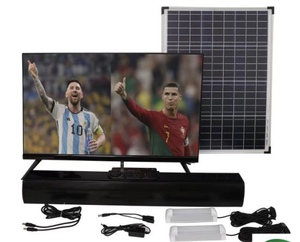
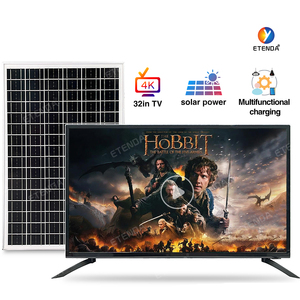
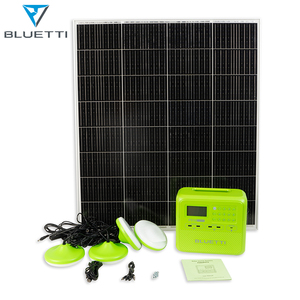
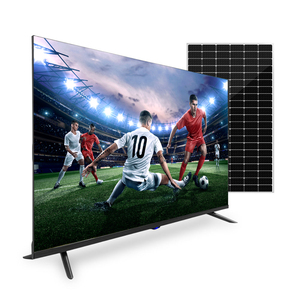
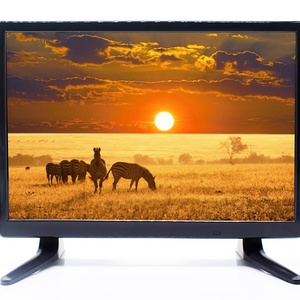
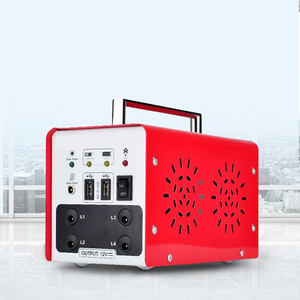
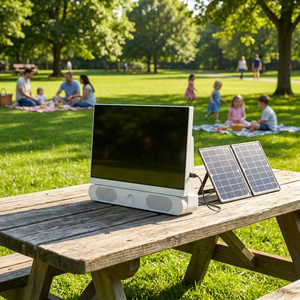
As off-grid field operations, mobile command units, outdoor pop-up kiosks, and emergency response teams require video conferencing, conference speakerphones are increasingly bundled with battery-powered, solar-assisted digital displays and outdoor smart monitors. Modern suppliers are engineering low-power DC-operated conference hubs that plug directly into multi-functional solar TV kits and DC-powered digital posters, ensuring seamless collaboration anywhere on earth.
End-users no longer want complex room controllers. The market demand has overwhelmingly pivoted to BYOM solutions where users walk into a conference space with their laptop, tablet, or smartphone and connect instantly. Modern speakerphones feature pre-paired, driverless USB-A/USB-C 2.4GHz wireless dongles that bypass corporate Bluetooth security lockouts while maintaining lossless 24-bit audio transmission.
Future speakerphone microcontrollers will move beyond simple noise cancellation toward edge-processed real-time voice identification (Speaker Diarization). Future hardware will isolate individual voice signatures in a room, tagging separate speakers for automated cloud AI meeting summaries (e.g., GPT meeting assistants, Microsoft Copilot) directly via hardware SDKs.
Global ESG (Environmental, Social, and Governance) compliance mandates that B2B technology procurement prioritize recyclability. Leading OEM factories in China are adopting Post-Consumer Recycled (PCR) plastics, recycled aluminum acoustic grilles, and replaceable Lithium-iron phosphate (LiFePO4) or high-density Li-ion battery modules to extend product lifespans beyond 7 years.
Backed by over two decades of consumer electronics and commercial audio manufacturing excellence, our enterprise infrastructure (referencing established industry standards under Naxa / Zomio export divisions) stands as a trusted supply chain partner for global brands, wholesalers, and government tenders in over 50 countries.
Every unit undergoes 100% automated acoustic frequency sweeps, microphone phase alignment tests, and thermal battery cycle stress-testing prior to shipment.
From custom industrial design ID, PCB layout design, and acoustic chamber tuning to custom firmware logo injection and retail packaging.
Global export certification readiness including FCC (USA), CE (Europe), RoHS, REACH, TELEC (Japan), KC (Korea), and UN38.3 battery transport safety standards.
Strategic partnerships with top chipset vendors (Realtek, Qualcomm, Actions Semi, Texas Instruments) ensure stable component supply and competitive pricing.
New Product Introduction (NPI) cycles executed within 30-45 days, taking your custom acoustic concept from CAD model to mass production smoothly.
Comprehensive post-sales technical assistance, hardware replacement policies, SDK documentation, and firmware updates for white-label partners.