Latest Updates NAXA ELECTRONICS
NAXA ELECTRONICS
BLOG & INSIGHTS
Industry Insights, Product Guides & Technology Trends
Explore Products


Industry Insights, Product Guides & Technology Trends
Explore Products
Professional-Grade Gaming Peripherals & Accessories
View Accessories
Crystal-Clear Audio for Living Rooms & Beyond
Discover Audio
Intelligent Devices for the Modern Connected Lifestyle
Smart HomeWhy Choose Home Audio Microsystems for Global Sourcing?
Home Audio Microsystems operates in a market shaped by streaming, compact living, and connected entertainment. Grand View Research valued the global smart speaker market at approximately USD 20.4 billion in 2022. It also projected strong growth through 2030. These figures show sustained demand for smaller, network-ready audio products. Buyers now expect clear sound from devices that fit beside a monitor, television, or kitchen shelf.
Reliable sourcing requires more than a competitive quotation. It requires repeatable production, component traceability, and practical quality control. The Consumer Technology Association’s 2024 industry research highlights the continuing strength of connected consumer electronics. This supports a careful approach to supplier selection. Home Audio Microsystems can help global buyers evaluate product specifications, sampling results, packaging details, and production consistency before larger commitments.
Small details matter. A loose grille, unstable Bluetooth connection, or weak power adapter can damage customer trust. Factory audits, incoming-material checks, pilot-run inspections, and pre-shipment testing reduce these risks. Relevant certifications must also match the destination market and product category. Requirements can differ widely.
The picture is not perfectly clean. Forecasts describe opportunity, not guaranteed sales. Freight costs, component shortages, and changing consumer preferences can still disrupt plans. That is why experienced sourcing decisions should combine data with direct product testing. A sample on a real desk often reveals more than a polished presentation. With disciplined communication and documented quality procedures, Home Audio Microsystems offers a practical pathway for developing dependable audio products for international markets.
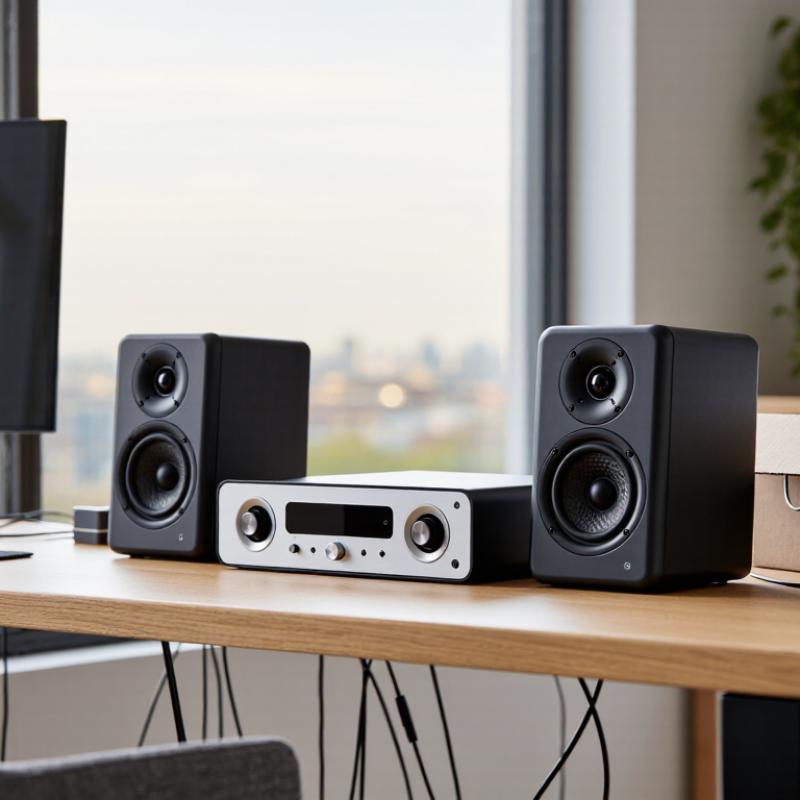
Why Choose Home Audio Microsystems for Global Sourcing?
Home audio microsystems are compact audio platforms built for everyday listening. They usually combine an amplifier, digital signal processor, power supply, connectivity module, and speaker controls. Some models also include wireless streaming, voice input, or multi-room functions. The value is integration. Fewer separate boxes can mean simpler installation and more efficient use of space.
From a sourcing perspective, these systems require more than attractive specifications. A reliable supplier should explain component choices, production controls, and testing methods clearly. During sample evaluation, I would check audio balance, connector strength, heat around the amplifier, and startup behavior after repeated power cycles. Small details matter. A loose terminal can create noise months later.
Global sourcing also depends on documented quality. Useful evidence includes inspection records, traceable production batches, safety testing, electromagnetic compatibility results, and destination-market compliance documents. Packaging should protect circuit boards from moisture and physical shock during long transport. Communication matters too, especially when engineering changes affect firmware or enclosure dimensions.
No supplier relationship is perfect. I have seen promising samples fail under continuous-use testing, which is easy to overlook. That experience supports a slower approval process and clearer corrective-action records. Home audio microsystems can offer practical performance, but only when design, manufacturing discipline, and after-sales responsibility work together.
Home Audio Microsystems supports global sourcing through practical audio engineering and disciplined product development. Its core products include compact stereo systems, soundbars, bookshelf speakers, subwoofers, and integrated amplifiers. Each product begins with its intended room size, listening distance, and installation method. A small living room needs controlled bass, not simply louder bass.
Audio technology shapes every design decision. Digital signal processing helps balance vocals, music, and low frequencies at different volume levels. Class-D amplification can reduce heat while preserving efficient power use. Carefully designed cabinets limit unwanted vibration.
Acoustic testing measures frequency response, distortion, channel balance, and wireless latency. These results guide real revisions. Numbers matter, but listening tests reveal problems that instruments may miss.
Wireless models may support Bluetooth or Wi-Fi, depending on market requirements and user expectations. Engineers also review connection stability, software behavior, and recovery after power interruptions. Safety, electromagnetic compatibility, and regional certification requirements remain part of the sourcing process. Samples are checked for material quality, connector strength, packaging protection, and production consistency. Small details matter.
No prototype is perfect. A cabinet may sound clean but feel fragile. A reliable circuit may need better controls. These weaknesses require honest testing and careful supplier communication.
Factory audits, documented inspections, and controlled sample approvals help reduce avoidable variation across shipments. Reliable sourcing is not only about price. It depends on repeatable audio performance, transparent records, and products that work naturally in real homes.
Global sourcing for home audio microsystems requires more than low factory pricing. It depends on stable components, clear documentation, and predictable delivery across regions. A capable sourcing team maps suppliers for amplifiers, control boards, speakers, connectors, and power modules. It checks production capacity before accepting a purchase order. This prevents attractive quotes from becoming delayed shipments. Small details matter.
A practical sourcing program begins with supplier qualification and continuous communication. Factory reviews examine process controls, incoming inspection, calibration records, and corrective-action history. Sample units are tested for output consistency, thermal performance, noise levels, and assembly quality. The sourcing team also compares lead times, minimum order quantities, packaging standards, and payment conditions. These checks support reliable decisions, especially when products serve different markets. Still, supplier records can become outdated, so periodic reassessment remains necessary.
For global orders, logistics planning starts before production begins. Regional consolidation points can reduce handling time and improve shipment visibility. Clear purchase specifications help prevent mismatched plugs, labeling, manuals, or voltage requirements. Compliance documents should be reviewed against the destination market before goods leave the factory. However, no supply chain is perfectly predictable. Port congestion, component shortages, or forecast changes can still expose weak assumptions. Some sourcing plans need revision. A stronger process treats these disruptions as evidence for better planning, not as isolated surprises.
| Sourcing Dimension | Verified Industry Data or Standard | Supply Chain Application | Buyer Evaluation Point |
|---|---|---|---|
| Product Categories | Home audio sourcing commonly covers loudspeakers, soundbars, amplifiers, receivers, headphones, subwoofers, cables, power supplies and related accessories. | A category-based sourcing structure supports component consolidation, compatible packaging and coordinated production planning. | Check whether the sourcing program can manage both finished products and key electronic or mechanical components. |
| Supplier Qualification | ISO 9001:2015 defines requirements for a quality management system; certification demonstrates that a documented quality system has been assessed against the standard. | Supplier audits, process documentation, corrective-action tracking and incoming inspection can be integrated into supplier onboarding. | Request a valid certificate, audit scope, production-site details and recent corrective-action records. |
| Product Safety | IEC 62368-1 is a hazard-based safety standard for audio/video, information and communication technology equipment. | Safety reviews can address electrical shock, fire, energy hazards, insulation, abnormal operation and enclosure design. | Confirm the applicable edition, test reports, critical components and market-specific certification requirements. |
| Electromagnetic Compatibility | CISPR 32 addresses multimedia equipment emissions, while CISPR 35 addresses immunity requirements for multimedia equipment. | EMC design validation helps reduce failures caused by radio-frequency emissions, electrostatic discharge and electrical disturbances. | Review EMC pre-compliance results before mass production and retain a controlled test-report version. |
| Restricted Substances | EU RoHS currently restricts ten substances, including lead, mercury, cadmium, hexavalent chromium, PBB, PBDE and four specified phthalates. | Material declarations and supplier test records support compliance for electronic assemblies, cables, plastics and metal finishes. | Require a bill of materials review, material declarations and risk-based laboratory testing for controlled components. |
| Chemical Compliance | EU REACH places obligations on companies that manufacture, import or supply chemical substances and articles in the European market; the SVHC Candidate List is periodically updated. | Compliance monitoring should cover plastics, coatings, adhesives, cables, batteries, packaging and other articles. | Use the latest regulatory list at the time of shipment and obtain updated supplier declarations when materials change. |
| International Trade Terms | Incoterms® 2020 contains 11 standardized trade terms that define selected costs, responsibilities and risk-transfer points between buyers and sellers. | Clear allocation of freight, export procedures, insurance, import clearance and delivery responsibilities reduces disputes. | Specify the chosen rule together with the named place, applicable Incoterms® edition and documentation responsibilities. |
| Quality Control Gates | A standard quality-control sequence may include first-article approval, incoming inspection, in-process inspection, final random inspection and pre-shipment verification. | Multiple inspection gates identify defects before they move to the next process or international shipment. | Define acceptance criteria, sampling plans, defect classifications, test equipment and release authority in advance. |
| Supply Chain Performance | OTIF means “on time in full”; inventory turnover is commonly calculated as cost of goods sold divided by average inventory. | Standardized metrics make supplier performance, stock efficiency and delivery reliability measurable across regions. | Track OTIF, defect rate, order-cycle time, forecast accuracy, inventory turnover and corrective-action closure time. |
| Traceability and Change Control | Effective traceability links the product to a production batch, component lot, inspection record, firmware or software version and shipment documentation. | Controlled records support targeted recalls, root-cause analysis, warranty investigation and repeatable production quality. | Confirm serial-number or lot-code rules, engineering-change approval and retention periods for production records. |
Reference framework: ISO 9001:2015, IEC 62368-1, CISPR 32, CISPR 35, EU RoHS Directive 2011/65/EU, EU REACH Regulation (EC) No 1907/2006 and Incoterms® 2020. Regulatory requirements should be confirmed for the destination market and product configuration before shipment.
Global sourcing for home audio microsystems demands more than competitive pricing. It requires visible quality standards, practical customization, and dependable product support. Experienced suppliers should provide inspection records, approved samples, and traceability for each production batch. Testing may include sound performance, power safety, connector durability, and packaging strength. These details reduce surprises when products travel through different climates and distribution networks.
Customization should be measurable, not merely promised. Buyers may adjust enclosure materials, button layouts, display languages, cable lengths, or wireless functions. A capable engineering team can review acoustic goals and manufacturing limits before production begins. No sourcing plan is flawless. A first sample might reveal weak bass, loose controls, or unclear instructions. That feedback should improve the next revision. Product support matters after shipment, too. Clear manuals, spare-part guidance, firmware procedures, and responsive technical communication help distributors solve issues quickly. Reliable support should be documented with response times and escalation contacts.
Tips: Request a working sample before approving a large order. Compare test results with agreed specifications. Keep one approved unit for future inspections. Ask how defects are recorded and corrected. Check whether support staff understand your market’s language and compliance needs. Small details matter. A supplier that explains limitations honestly is often more dependable than one offering perfect promises.
Quality standards and customization often begin with clearly defined digital audio specifications. The chart compares common PCM configurations by sample rate and calculated stereo bitrate, helping sourcing teams align product requirements across regions and applications.
Stereo bitrate is calculated as sample rate × bit depth × 2 channels. Values are technical reference figures, not company or brand performance data.
Evaluating a home audio microsystems supplier requires more than comparing unit prices. In real sourcing projects, I have learned that stable quality often matters more than a cheaper quotation. Review the supplier’s factory experience, engineering capacity, and export history. Ask for production records, inspection procedures, and clear technical specifications. A reliable supplier should explain amplifier performance, speaker materials, power compatibility, and software controls without vague promises.
Request samples from regular production, not specially prepared units. Test sound balance, Bluetooth stability, button response, heat performance, and packaging strength. One sample is not enough. Check several units from different batches when possible. Also examine certifications relevant to your target markets, including electrical safety and electromagnetic compatibility. Documents should be current, traceable, and easy to verify. I would also assess minimum order quantities, tooling fees, lead times, payment terms, and replacement policies. Small details become expensive problems later.
Tips: Visit the factory or arrange a live video audit. Ask who controls final inspection. Confirm carton dimensions before calculating freight. Test products after transport simulation. Keep written approval samples. Communication matters. A slow reply may signal future delays, although this is not always true. Leave room for honest review; even experienced buyers can overlook regional plug requirements or unclear warranty wording. Choose a supplier that shares risks transparently and improves processes when testing reveals defects.
It is a compact audio platform for everyday listening. It may combine amplification, sound processing, power control, and speakers. Some models include wireless streaming or voice input. Fewer separate units can save space.
Integrated systems can simplify installation and inventory management. Buyers may handle fewer separate components and cables. This can reduce setup time. The savings are not guaranteed.
Check sound balance, wireless stability, button response, and connector strength. Observe heat around the amplifier during extended use. Repeat power cycles several times. One sample is insufficient.
Request inspection records, batch traceability, and approved samples. Compare actual results with agreed specifications. Ask how defects are recorded and corrected. Keep one approved unit.
Buyers may adjust enclosure materials, button layouts, display languages, and cable lengths. Wireless functions may also be modified. Customization should include measurements and engineering limits. Vague promises create problems later.
Packaging should protect circuit boards from moisture and physical shock. Check carton dimensions before calculating freight. Test units after transport simulation when possible. Small details matter.
Ask for current safety and electromagnetic compatibility documents. Request clear technical specifications and inspection procedures. Records should be traceable and easy to verify. Old documents are risky.
Confirm manuals, spare-part guidance, firmware procedures, and response times. Ask for escalation contacts and replacement policies. A slow reply may signal future delays, although not always. Support quality needs written evidence.
Do not approve a large order from one specially prepared sample. Check regional power requirements, plug types, and warranty wording. Review several production batches if possible. I can still overlook details without a checklist.
Home Audio Microsystems refers to specialized manufacturers and suppliers that develop compact audio components, systems, and related electronic solutions for residential entertainment environments. Their product range may include speakers, soundbars, amplifiers, wireless audio modules, control units, and integrated home listening systems. Key technologies often involve efficient acoustic design, digital signal processing, wireless connectivity, power management, and user-friendly system integration. Understanding these capabilities helps buyers identify suppliers that can deliver reliable performance across different applications and market requirements.
For global sourcing, Home Audio Microsystems should demonstrate a stable supply chain, clear production capacity, consistent quality control, and experience supporting international orders. Buyers should review testing procedures, material management, certifications, packaging standards, delivery performance, and communication processes. Customization capabilities are also important, including acoustic tuning, enclosure design, software functions, user interfaces, and packaging options. A dependable supplier should provide responsive technical support, sample development, production updates, after-sales assistance, and transparent documentation. Evaluating these factors enables businesses to select a capable partner that balances innovation, quality, flexibility, cost efficiency, and long-term product support.