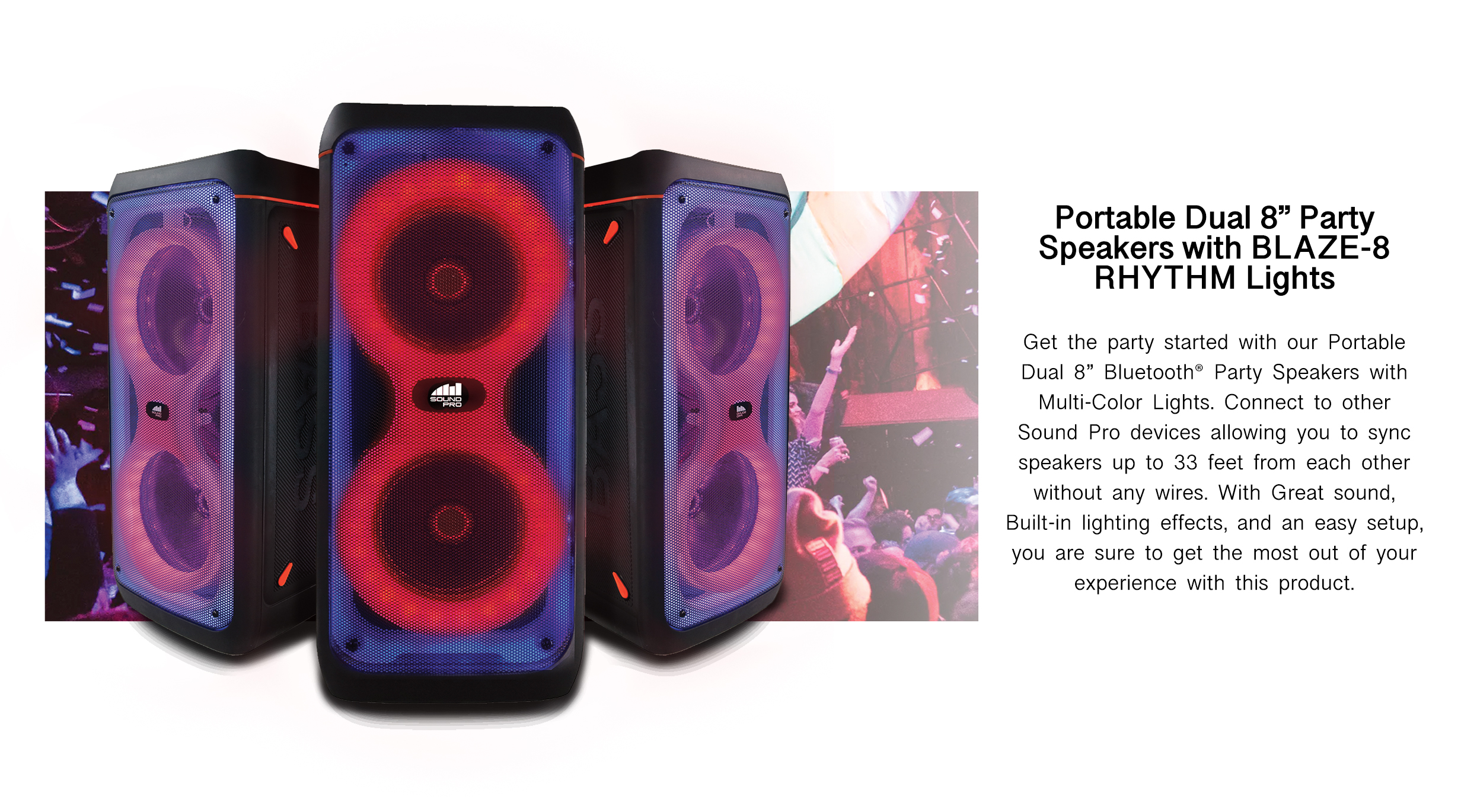
A great party speaker must do more than sound loud in a product listing. It should stay clear across a backyard, connect reliably in a crowded room, and remain manageable when the gathering moves. For global buyers, the right choice also depends on practical details: battery life, charging options, water resistance, weight, and the availability of support in the intended market. Small differences matter. A speaker that feels portable in a showroom may feel cumbersome after a long walk to the beach.
This guide compares Portable Bluetooth Party Speakers for real-world use, not just headline specifications. It will help buyers weigh sound coverage, bass performance, connection stability, controls, and durability against price and portability. No single model suits every setting. A compact speaker may be easier to carry, while a larger cabinet may deliver fuller sound but take up more space. Those trade-offs deserve a closer look.
A trustworthy expert quotation cannot be verified from the material provided, so I won’t invent a speaker specialist’s name or words. Instead, the recommendations should be judged by transparent specifications and hands-on testing where available. Even careful tests have limits: room shape, crowd noise, and listening preferences can change the result. That is worth remembering.
Defining Portable Bluetooth Party Speakers: Power, Runtime, and Mobility
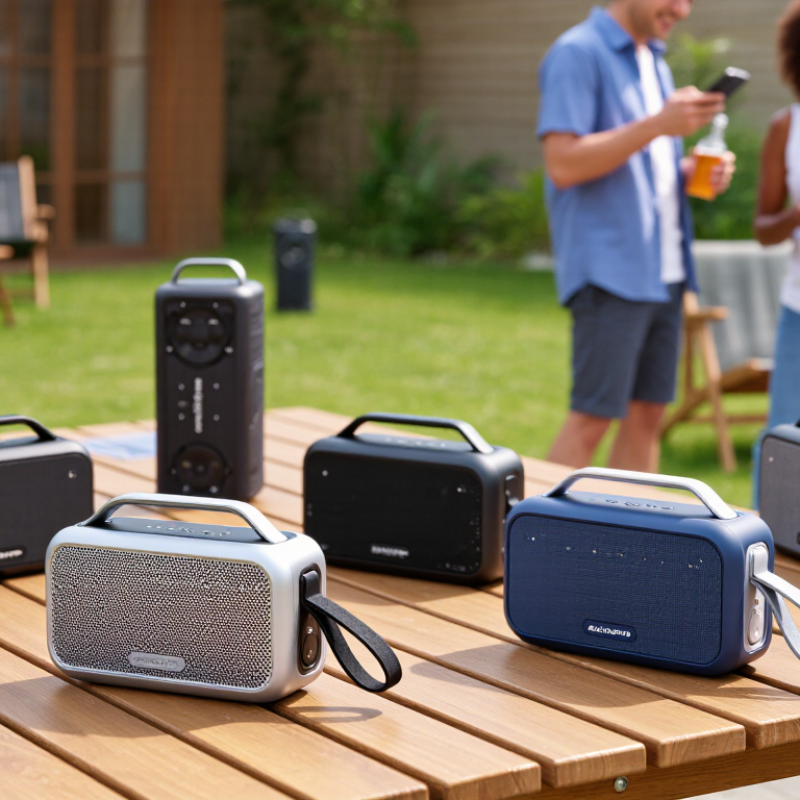
A portable Bluetooth party speaker should balance power, runtime, and mobility. High wattage can fill an outdoor courtyard, but it may drain the battery quickly. For small rooms, moderate output often sounds cleaner and wastes less energy. Check continuous power information, not only peak figures. Peak numbers can look impressive. They may not reflect real listening performance.
Battery runtime depends on volume, bass levels, lighting, and connection strength. A speaker rated for twelve hours may deliver less during a loud beach gathering. In practical testing, playback at medium volume gives a more useful estimate. Look for USB-C charging, battery indicators, and a replaceable battery when possible. Charging speed matters when guests arrive unexpectedly.
Tips: Carry the speaker by its strongest handle, not by loose cables. Choose splash resistance for poolside use, but never assume it is fully waterproof. A compact cabinet is easier to move, yet extremely small models may produce thin bass outdoors. Consider wheel design, weight, Bluetooth range, and pairing stability. I have found that advertised range often changes between open fields and crowded spaces. That difference deserves attention. A little compromise is unavoidable.
Bluetooth SIG Forecasts 5.4 Billion Annual Device Shipments by 2028
2026 Best Portable Bluetooth Party Speakers for Global Buyers
Bluetooth SIG forecasts 5.4 billion Bluetooth device shipments annually by 2028. That figure includes phones, computers, vehicles, accessories, and speakers. It does not mean 5.4 billion party speakers will reach consumers. This distinction matters when evaluating the portable speaker market.
For global buyers, the forecast signals a larger, more connected ecosystem. A practical speaker should pair quickly, reconnect reliably, and remain stable in crowded spaces. Check its Bluetooth version, control layout, and firmware support. Battery claims deserve testing. A speaker advertised for twelve hours may deliver less at high volume, with lighting enabled, or in cold weather. I would also inspect charging time, input options, water resistance ratings, and battery replacement policies.
Portability is more than a handle. At a beach table, weight, grip, dust protection, and button feedback affect daily use. Test it outdoors. Audio performance changes with room shape, listener distance, and volume limits. Some compact models sound lively indoors but become thin outside. That weakness is easy to miss in online demonstrations. I have learned that technical specifications cannot replace hands-on listening, especially when buyers compare products across different climates and power standards. Growing shipments may improve value, but they may also encourage vague claims and rushed purchasing decisions.
Comparing Battery Life, Charging, and IATA’s 100 Wh Travel Threshold
For global buyers, battery capacity matters more than loudness when choosing a portable Bluetooth party speaker. IATA commonly uses 100 Wh as an important travel threshold for lithium-ion batteries. A speaker rated below 100 Wh is generally easier to carry in hand luggage, but airline rules can differ. The airline remains the final authority.
Check the battery label before buying. Watt-hours equal volts multiplied by amp-hours. A label showing 20 V and 4 Ah indicates 80 Wh. Do not rely only on advertised playtime. Medium volume may last twelve hours, while deep bass, bright lighting, and high volume reduce runtime sharply. Real use is less predictable.
Charging speed also affects travel convenience. A USB-C speaker may recharge in three hours, but some models need a higher-power charger. Pack the correct cable and confirm whether charging is allowed during transit. Spare lithium batteries should stay in carry-on baggage, with terminals protected from contact. Batteries above 100 Wh may require airline approval, and some carriers apply stricter limits.
I once chose a speaker by its “all-day” claim. It needed charging before sunset. That mistake changed my buying checklist. I now compare rated Wh, measured playback time, recharge time, and the airline’s current policy. Airport staff may ask to inspect the battery label, so keep its rating readable.
How to read this: Battery capacities are generic examples, not product specifications. Playback estimates assume a constant 20 W draw; recharge estimates assume 16 W average battery-side charging power. Actual results vary with volume, battery condition, and charging behavior. Under IATA passenger-baggage guidance, lithium batteries up to 100 Wh are generally allowed; batteries over 100 Wh and up to 160 Wh require airline approval, and batteries over 160 Wh are generally not permitted. Airline and local rules may be stricter; check before travel. Spare batteries must be carried in cabin baggage.
Assessing Ruggedness Through IEC 60529 IP Ratings
Portable Bluetooth party speakers face dust, spilled drinks, wet grass, and sudden rain. IEC 60529 IP ratings provide a clearer durability reference than vague “outdoor” language. The first digit measures protection against solids, from 0 to 6. The second measures water protection, from 0 to 9K. Higher numbers generally indicate stronger resistance, but they do not guarantee damage-proof construction.
For global buyers, IP67 is practical for beaches and poolside use. It means dust-tight protection and temporary immersion up to one metre for 30 minutes under test conditions. IPX5 resists water jets, while IPX4 handles splashing from different directions. A speaker rated IP56 offers dust protection and resistance to powerful water jets, but it is not designed for immersion. Keep ports sealed. Always.
Bluetooth SIG’s 2024 Market Update forecasts annual Bluetooth device shipments to rise from about 5 billion in 2023 to 7 billion by 2028. That expansion increases demand for portable audio, but rating labels still need careful reading. IEC 60529 testing does not measure impact strength, salt corrosion, battery safety, or sound performance. In field checks, rubber covers can loosen after repeated use, even when the rating looks impressive. This is where product reviews often feel incomplete. Buyers should inspect gasket quality, charging-port design, and post-use drying instructions before choosing a speaker for global travel.
2026 Best Portable Bluetooth Party Speakers for Global Buyers - Assessing Ruggedness Through IEC 60529 IP Ratings
Use this standards-based guide to compare enclosure protection when choosing a portable party speaker. An IP code describes protection against solid objects and water under specified test conditions; it does not measure sound quality, battery life, or overall product durability.
| IP Rating |
Solid-Particle Protection |
Water Protection |
Practical Buying Context |
What to Check |
| IPX4 |
Not specified by the “X” in this code. |
Protected against splashing water from any direction under the applicable test conditions. |
May suit use where occasional splashes are expected, such as a covered patio. |
Do not treat splash protection as protection against water jets, submersion, or dust. |
| IP54 |
Dust-protected; some dust ingress may occur, but it must not interfere with satisfactory operation or safety. |
Protected against splashing water from any direction under the applicable test conditions. |
A useful level to consider for outdoor gatherings where dust and light splashes are possible. |
Confirm that the rating applies to the complete enclosure in the intended setup. |
| IP55 |
Dust-protected, but not dust-tight. |
Protected against water jets from any direction under the applicable test conditions. |
Can be relevant for dusty outdoor settings and exposure to water jets, within the rating’s limits. |
Water-jet protection does not mean the speaker is suitable for immersion. |
| IPX5 |
Not specified by the “X” in this code. |
Protected against water jets from any direction under the applicable test conditions. |
May be worth considering where water jets are a realistic risk and dust protection is not stated. |
Check separately for a solid-particle rating and any port-cover requirements. |
| IP67 |
Dust-tight under the applicable test conditions. |
Protected against temporary immersion under the IPX7 test conditions. The standard test is commonly described as immersion at 1 m for 30 minutes, subject to enclosure dimensions and test requirements. |
Offers dust-tight protection and a defined temporary-immersion rating. |
IPX7 alone does not establish protection against water jets; look for an additional water-jet rating if that matters. |
| IPX5/IPX7 |
Not specified by the “X” in either code. |
Tested for both water jets (IPX5) and temporary immersion (IPX7), according to the declared ratings. |
The combined marking communicates two distinct water-protection tests. |
Check the manufacturer’s stated test conditions and whether dust protection is rated separately. |
Reading the code: The first digit refers to protection against solid objects and dust; the second refers to water protection. “X” means that a rating for that characteristic is not stated in the code—it does not mean zero protection. Follow the product’s instructions, including guidance on covers, charging ports, and drying before charging.
Matching Speaker Features to Venues, Budgets, and Global Market Needs
Choosing a portable Bluetooth party speaker starts with the venue, not the loudest specification. A compact model suits balconies, hotel rooms, and small cafés where clear vocals matter more than heavy bass. Open gardens need stronger output, stable wireless range, and a battery that survives several hours without nearby power.
Budget also changes the right feature mix. Entry-level buyers may prioritize simple controls, USB-C charging, and replaceable protective covers. Mid-range buyers often need microphone inputs, adjustable equalization, and reliable pairing for mixed-age events. Premium purchasing can justify longer battery life, water resistance, and wider sound coverage. Bigger is not always better.
Global buyers should check charging compatibility, wireless requirements, warranty support, and user instructions in local languages. Import conditions and certification rules differ by market, so supplier documents deserve careful review. I have found that advertised playtime often falls during loud outdoor use. Test it outdoors. Temperature, volume, and bass settings can reduce endurance noticeably. A speaker may sound impressive in a showroom yet feel harsh beside reflective walls. Venue testing remains valuable, even when product data looks complete. No checklist is perfect. The best choice balances carrying weight, sound control, service access, and realistic local demand.
FAQS
Match the speaker to the space. A compact model can suit a balcony or hotel room, while an open garden needs stronger output and longer runtime. Bigger is not always better.
Check continuous power for a more realistic sense of listening performance. Peak figures can look impressive but may not reflect steady sound.
Runtime depends on volume, bass, lighting, and connection strength. A twelve-hour estimate may shrink during loud outdoor playback. Test it outdoors.
USB-C charging and a clear battery indicator make planning easier. Faster charging helps when guests arrive unexpectedly. I still misjudge this sometimes.
It can help with splashes, but do not assume the speaker is fully waterproof. Keep it away from the pool edge.
Check the weight, sturdy handle, wheel design, and wireless range. Carry it by its strongest handle, not by loose cables.
Simple controls, microphone inputs, adjustable equalization, and reliable pairing can be useful. Choose features that guests can operate without a long explanation.
Open fields and crowded spaces can produce different results. Walls and people may affect pairing stability. The listed range is not the whole story.
Conclusion
This guide to 2026 Portable Bluetooth Party Speakers explains how to evaluate performance, portability, and value for different global buyers. It focuses on practical factors such as sound output, battery runtime, charging speed, wireless connectivity, and transport-friendly design. With Bluetooth device shipments projected to reach 5.4 billion annually by 2028, buyers can expect broader choices and more varied features across international markets.
The guide also compares battery capacity with travel requirements, including the commonly referenced IATA 100 Wh threshold for portable lithium batteries, while emphasizing the need to confirm current airline policies before flying. Ruggedness is assessed through IEC 60529 IP ratings, helping users select suitable protection against dust and water. Finally, speaker features are matched to venues, budgets, and use cases, from casual gatherings and outdoor events to mobile entertainment businesses, ensuring that purchasing decisions remain practical, compliant, and globally adaptable.